
Every product its own material
Choosing the right material for a product is not always easy. Each material has unique properties and its own advantages and disadvantages. For each product, we assess which material best suits it. For example, is it a decorative product or does it need to withstand impact? Is the product for indoor or outdoor use? Sometimes, multiple materials can be chosen for products, allowing you to make your own decision. For example, would you prefer a stronger material or a unique color combination?
If your desired color and/or material is not listed as a standard combination, please contact us. Customization is possible for many products, and we would be happy to discuss the options with you.
Our materials
All our materials explained to help you make the right choice.
POA
Perfect for toys and decoration
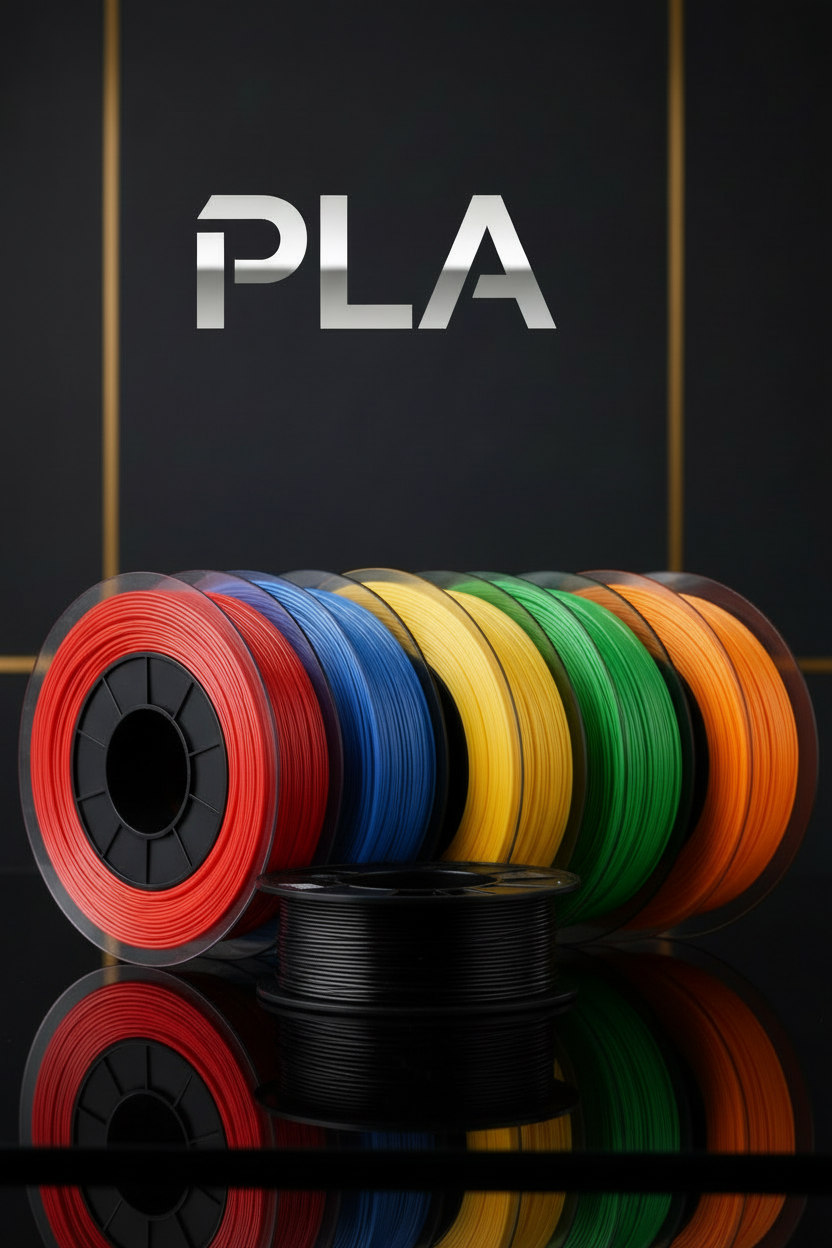
PLA is a biodegradable and plant-based plastic, made from renewable resources such as corn starch or sugarcane. PLA is the most commonly used material in our products. This is partly because it is available in many different colours. PLA is relatively easy to print with, which allows for complex shapes to be printed. However, PLA also has disadvantages, such as its low heat resistance. PLA will deform at temperatures above 50 degrees Celsius, making it unsuitable for all types of products. Additionally, it is not the strongest type of plastic and therefore not suitable for products that need to bear a lot of weight, for example. PLA attracts moisture and can become brittle with prolonged exposure to moisture. PLA is mainly suitable for decorative products and toys. PLA is available in many different colours and finishes.
PLA+
For items that need to steal the show
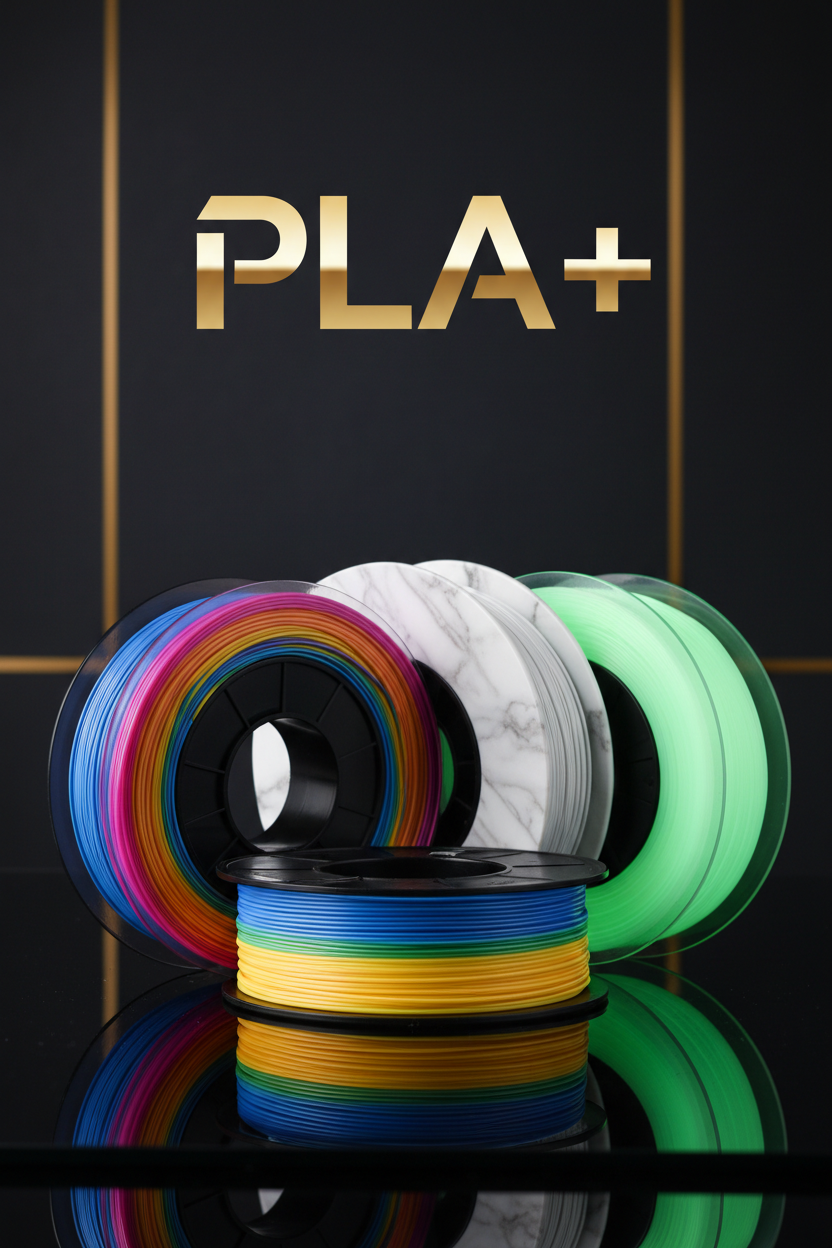
PLA+ is exactly the same material as normal PLA. We use the " +" to indicate that it is a premium color. See the section on PLA for the properties, advantages and disadvantages of this material. PLA+ is often multi-colored, allowing different shades of a color to blend into each other. It is even possible for a rainbow effect to occur. Other options that can be considered include, for example, metallic colors, marble colors, or colors that glow in the dark. This makes PLA+ the ideal material for decorative products. PLA+ is available in various special colors and finishes.
PETG
For items that need to be able to take a beating
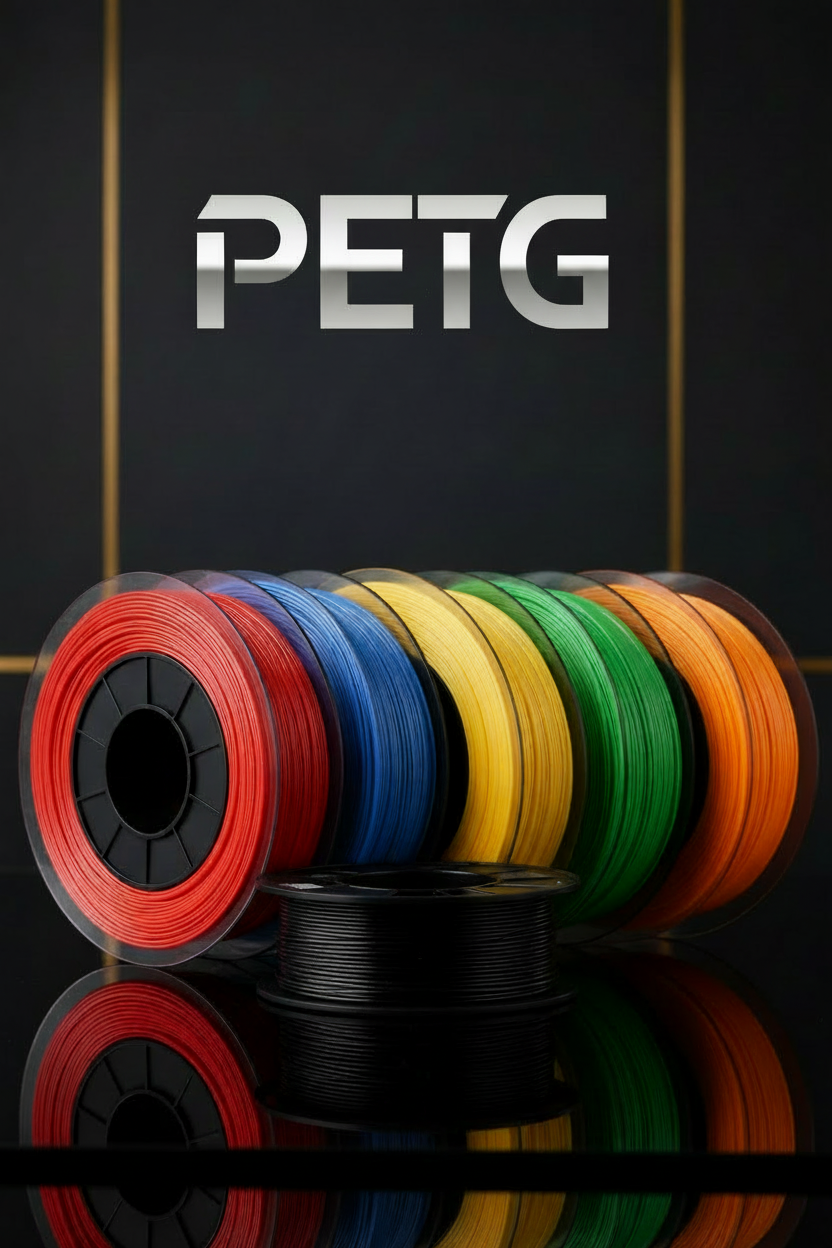
PETG is a plastic variant of the material used for soda bottles (PET), to which glycol has been added to make it stronger and more heat-resistant. PETG is only slightly more difficult to print than PLA, so reasonably complex shapes are still possible. The advantage of PETG is that it is much stronger than PLA. In addition, it also has a much higher heat resistance. PETG will only deform at temperatures above 65 degrees Celsius, making it suitable for more products. Finally, PETG is much more resistant to moisture. A disadvantage of PETG is that it is available in far fewer colors, making it unsuitable for many products. PETG is available in various colors and finishes.
ABS
Strong and heat resistant
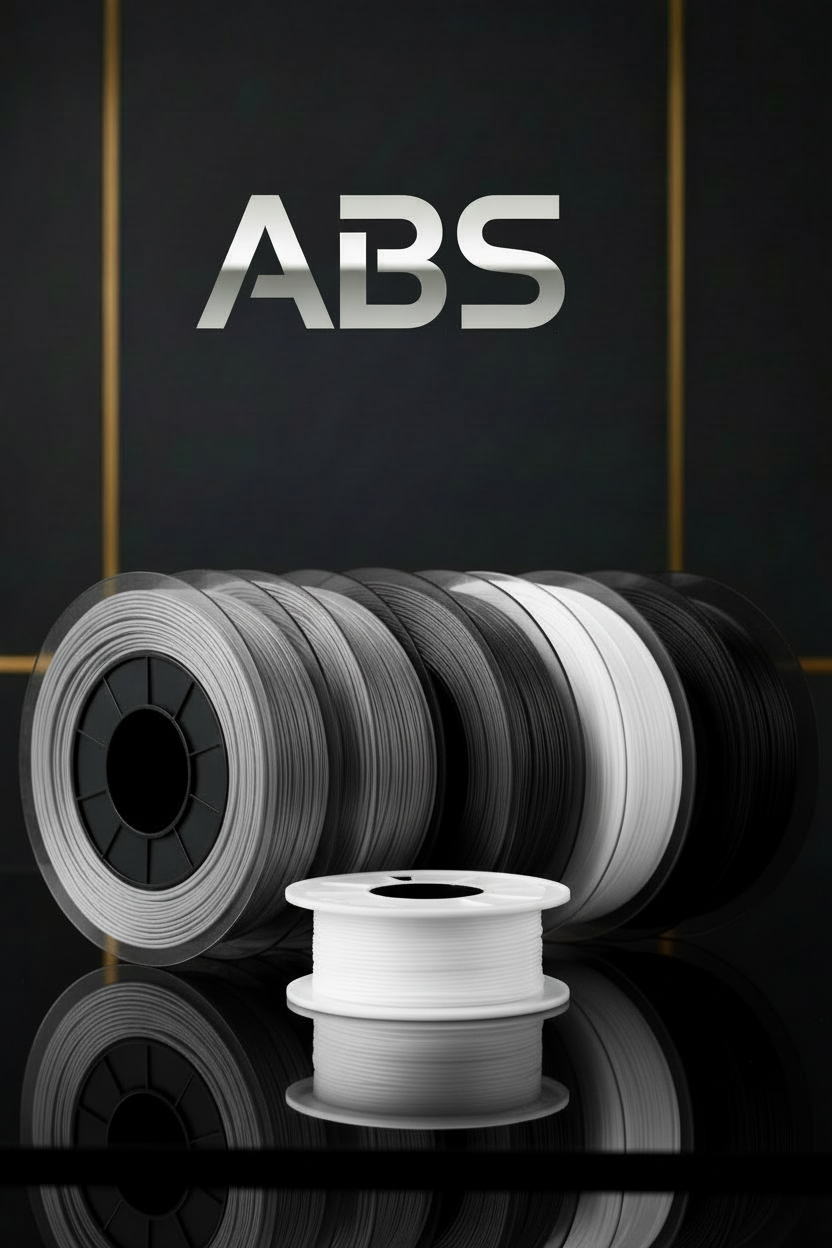
ABS is a very strong type of plastic that, unlike plant-based PLA, is petroleum-based. One advantage of ABS is that it is a very strong material, even stronger than PETG and many times stronger than PLA. A second advantage is its high heat resistance. ABS will only deform at temperatures above 80 degrees Celsius. In addition, ABS, like PETG for example, is more resistant to moisture. A disadvantage of ABS is that, like PETG, it is available in far fewer colors. Furthermore, it is a much more difficult type of plastic to print with, which limits the complexity of the shapes. ABS is available in various colors.
As soon as possible
Strong, heat and UV-resistant
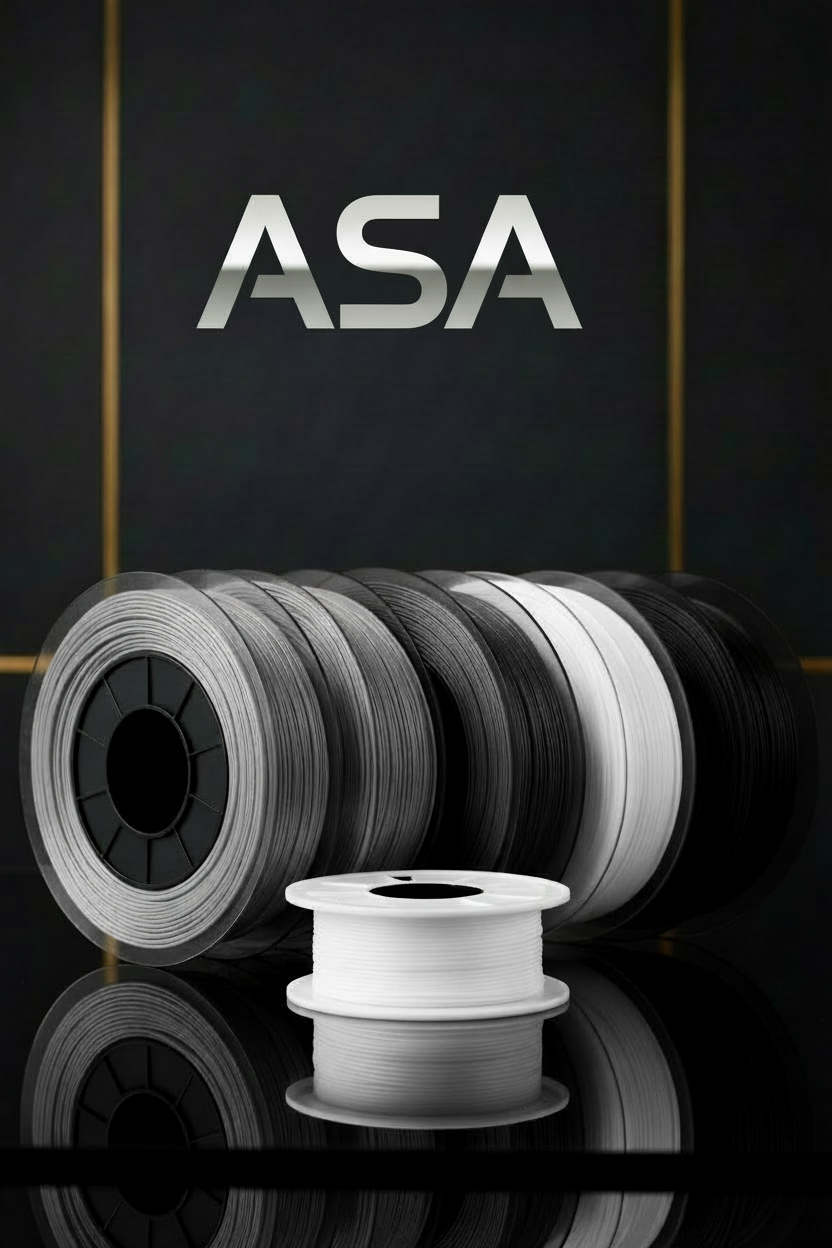
ASA is a plastic very similar to ABS, but better suited for outdoor use. This is because ASA is the most UV-resistant type of plastic in our range. Additionally, ASA is as strong as ABS and even slightly more heat-resistant. ASA will only deform at temperatures above 85 degrees Celsius. A disadvantage of ASA is that it is available in the fewest colors of all materials. Furthermore, like ABS, it is a very difficult type of plastic to print with, which limits the complexity of the shapes. Finally, it is much more expensive compared to ABS. ASA is available in various colors.
TPU
When ultimate flexibility is needed
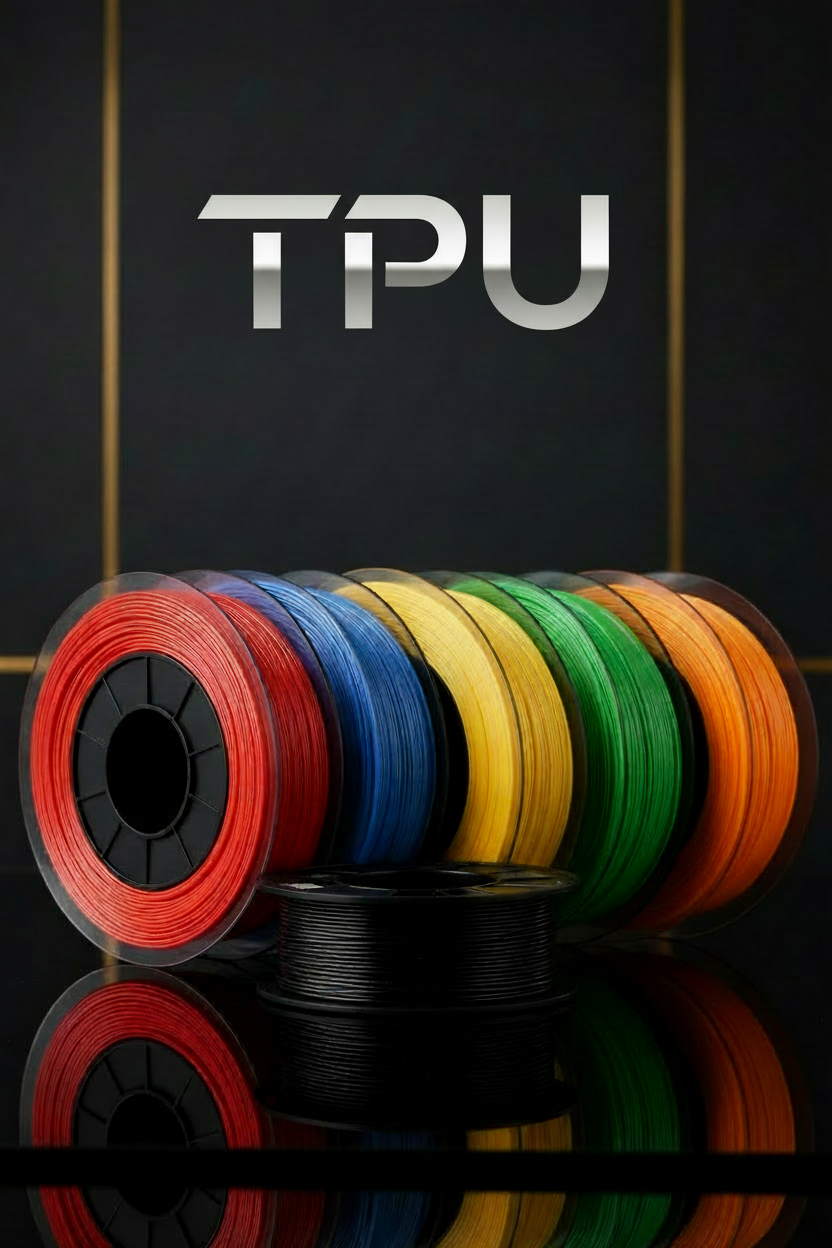
TPU is a flexible type of plastic that combines the properties of rubber and plastic. TPU remains flexible after printing and can, for example, be squeezed and then spring back to its original shape. This makes TPU suitable for certain specific products. TPU is by far the most difficult material (among our current materials) to print with. Additionally, it is only available in a limited range of colors. For these reasons, TPU will only very rarely be found in products in our assortment.
Compare our different materials
PLA / PLA+
Heat resistance: up to 50 degrees Celsius
Strength: average, can break when dropped and/or under prolonged stress
Water resistance: resistant to light moisture, can become brittle with prolonged exposure
UV resistance: can discolour and/or become brittle with prolonged exposure
Flexibility: very rigid, not flexible
Colours: many colours and finishes available
Lifespan: long lifespan with normal use, more limited with daily use
Environmental friendliness: made from renewable raw materials, biodegradable
Suitable for: decorative products, indoor use
PETG
Heat resistance: up to 65 degrees Celsius
Strength: sturdy, will not break easily
Water resistance: good, can be used in humid environments
UV resistance: may slightly discolor and/or become brittle with prolonged exposure
Flexibility: stiff, absorbs shocks better
Colors: various available colors and finishes
Lifespan: long lifespan with normal daily use
Environmental friendliness: easily recyclable, not biodegradable
Suitable for: functional products for daily use, indoor use
ABS
Heat resistance: up to 80 degrees Celsius
Strength: very strong, will not break easily
Water resistance: good, can be used in humid environments
UV resistance: may discolour slightly and/or become brittle with prolonged exposure
Flexibility: stiff, absorbs shocks better
Colors: limited number of available colors
Lifespan: very long lifespan with normal daily use
Environmental friendliness: limited recyclability, not biodegradable
Suitable for: functional products for daily use, indoor use
As soon as possible
Heat resistance: up to 85 degrees Celsius
Strength: very sturdy, will not break easily
Water resistance: very good, can be used in humid environments or outdoors
UV resistance: very good, will hardly discolour even with prolonged exposure
Flexibility: rigid, absorbs shocks better
Colours: very limited number of colours available
Lifespan: very long lifespan with normal daily use
Environmental friendliness: limited recyclability, not biodegradable
Suitable for: functional products for daily use, indoor and outdoor use
From design to product
Our printers
Here you will find an overview of the 3D printers we currently have in use. Take a look and meet our hard workers!
Herman
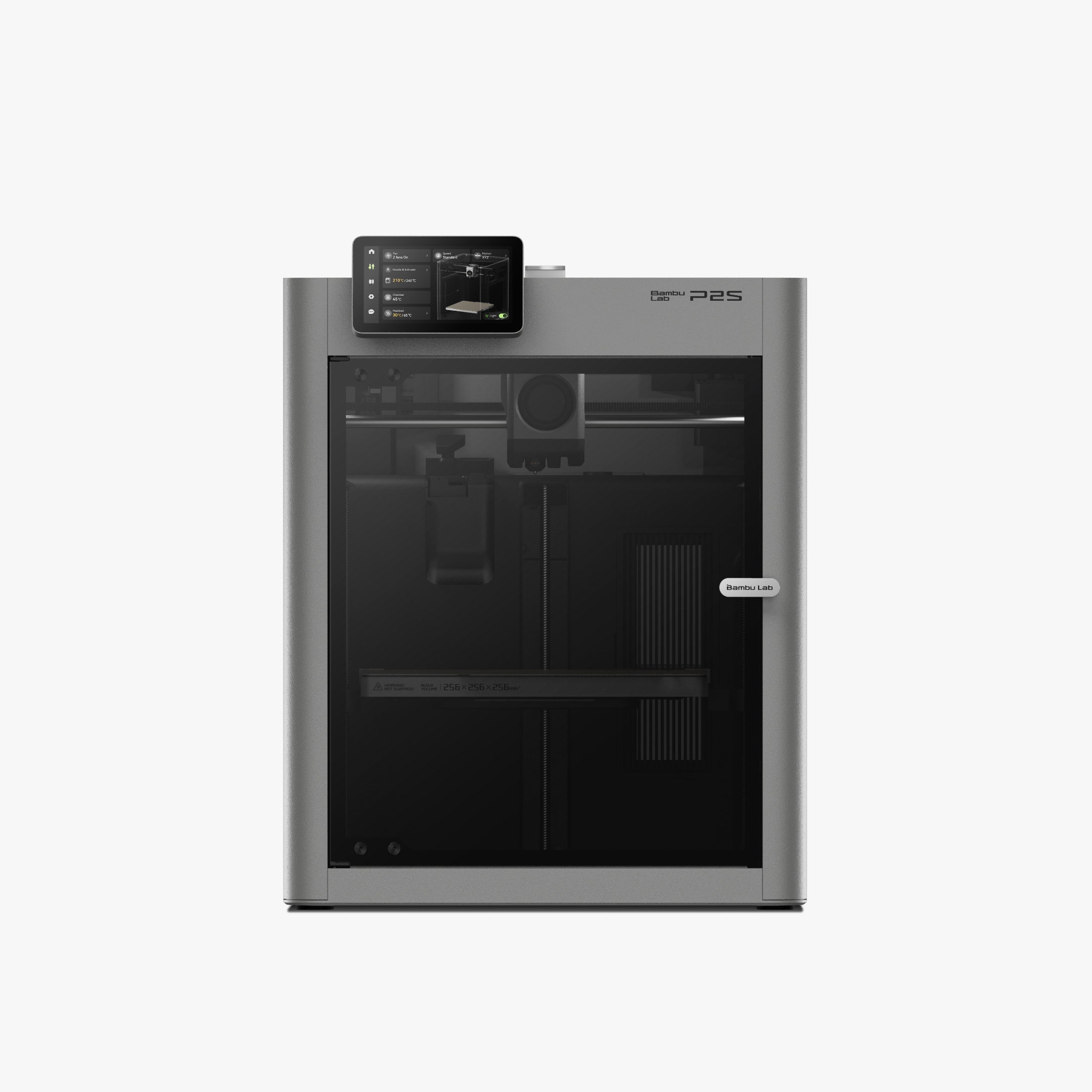
Our Bambu Lab P2S 3D printer, named Herman after our bird, is an excellent high-quality single nozzle 3D printer. With this printer, we can create objects up to 25x25x25cm. While it is possible to print with different colours using this printer, we try to keep this to a minimum. Because this printer only has 1 nozzle, when switching to another colour, it must purge the previously used colour to prevent colour mixing. This results in a lot of waste. Especially when an item has many different colours that are intertwined, the weight of the waste can be many times more than the weight of the final model. However, for a single-colour object, this is the fastest printer we have. With this printer, we can print objects in both PLA/PLA+ and PETG.
Chipito
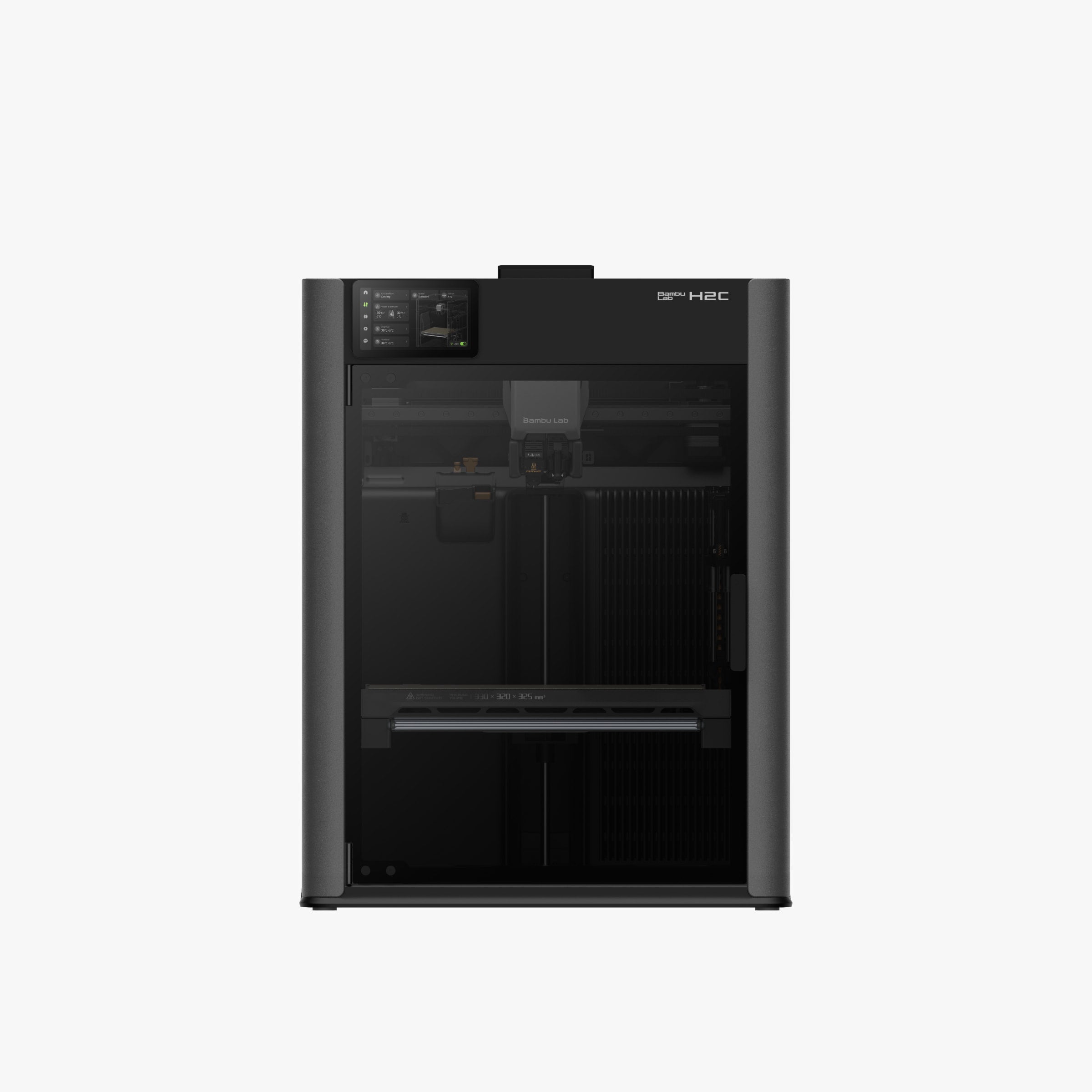
Our Bambu Lab H2C 3D printer, named Chipito, is an excellent high-quality multi-nozzle 3D printer. With this printer, we can create objects up to 32x32x32cm. Because this printer uses no less than 7 nozzles, it is excellently suited for creating multi-color objects. As this printer uses a dedicated nozzle for each color (up to 7 colors per object), very little waste is generated. This also makes color changes much faster. Since this printer has an actively heated chamber, it is possible to print objects in ABS and ASA, in addition to PLA/PLA+ and PETG.

Binnenkort beschikbaar
We are continuously working to optimize our production process. We closely monitor trends and developments in 3D printing. When we expand our range of printers, we will share it here.
From idea to product - this is how your order comes to life
Every product starts with an idea. Sometimes it's our own design, sometimes an existing design by a talented designer, which we may optimize for the best result. In this phase, we look at functionality, appearance, and the right material for the intended use.
Next, we digitally elaborate the design. Using 3D software, every detail is meticulously determined, ensuring that the final product is not only beautiful but also sturdy and practical to use.
After this, we create one or more prototypes for each product. We test these extensively to ensure the product meets our high-quality standards. If necessary, we make further adjustments to the design.
Then the production process begins. The product is built layer by layer using one of our 3D printers. This process makes it possible to realize unique and detailed designs.
After printing, each product is inspected and, if necessary, post-processed. This includes removing minor imperfections or supports and ensuring a neat finish. Only products that meet our high-quality standards move on to the next and final step.
Finally, your order is carefully packed and shipped. This ensures that your product arrives safely and in perfect condition.
From the initial design to the moment you hold it in your hands: every product is made with care and attention.
Our production process
Our products are created using 3D printing technology. This means that each product is built up layer by layer. Instead of mass production, each item is produced individually, with attention to detail and quality.
During printing, molten material is precisely deposited to create the final shape layer by layer. This technique makes it possible to create unique designs and complex shapes that are difficult or even impossible to achieve with traditional production methods. It also offers many possibilities for customization.
Because the product is built up from thin layers, slight lines may be visible on the surface. Small imperfections may also occur. This is a normal and characteristic part of the 3D printing process and makes each item unique.
After printing, each product is inspected and, if necessary, post-processed to ensure the best possible end result.
Our quality control
Our work doesn't stop once a product comes off the printer. Every product undergoes a meticulous quality control process to ensure it meets our high standards.
During this control, we examine the finish, sturdiness, and accuracy of the design. Small imperfections and visible layers are normal for 3D-printed products and are part of the unique character of the product, but we ensure they always remain within our high-quality requirements.
Products that require additional post-processing are carefully adjusted so that each item is neat and ready for use. Only when a product fully meets our high-quality requirements is it packaged and prepared for shipping.
This way, we guarantee that you receive a product that is not only beautiful to look at but also functional and durable in use.
Frequently Asked Questions About Materials
Can I get a product in a different color or material?
For many products, customization is possible. We are happy to advise you on the possibilities, so please feel free to contact us.
Which brands do you use?
At DuckSurprise, we currently work exclusively with Bambu Lab 3D printers. This is because we are familiar with them and the quality is excellent. Most basic filaments are also from Bambu Lab. Sometimes special colours may be from a different brand. These have, of course, been extensively tested. This way, we can also guarantee that the properties of every product are identical.
How does DuckSurprise handle sustainability?
At DuckSurprise, sustainability is a top priority. Wherever possible, we use PLA, made from renewable and biodegradable resources, for our products. However, some products require a different material. While these materials are inherently more taxing on the environment, given their intended use, they can provide such a significantly longer lifespan that they prove to be the more sustainable option. For each product, we carefully choose the material that offers the best compromise between functionality and sustainability. Additionally, we use high-quality 3D printers to minimize energy consumption and potential waste.